




a former client came back asking about two businesses, a pet apparel store losing its wholesale base and a nonprofit run by the same founder. Meta took the lead form to about 160 submissions at roughly $13 a lead on under $1,300 of 30-day spend. Three weeks later February held five students and March held none, so the budget moved toward the number that was behind.

Key results.
Meta produced lead volume and quality at a low cost per lead. The enrolment those leads were meant to fill did not follow.
Challenge
Dog is Good sells identity merchandise to dog owners, and by late 2025 the wholesale base it was built on was thinning. Stephanie Schoniger put it plainly: “We’re not getting the same orders from our mom-and-pop stores that we used to.” The store was restarting B2C advertising from cold after separating from a previous partner, with money as the standing constraint.
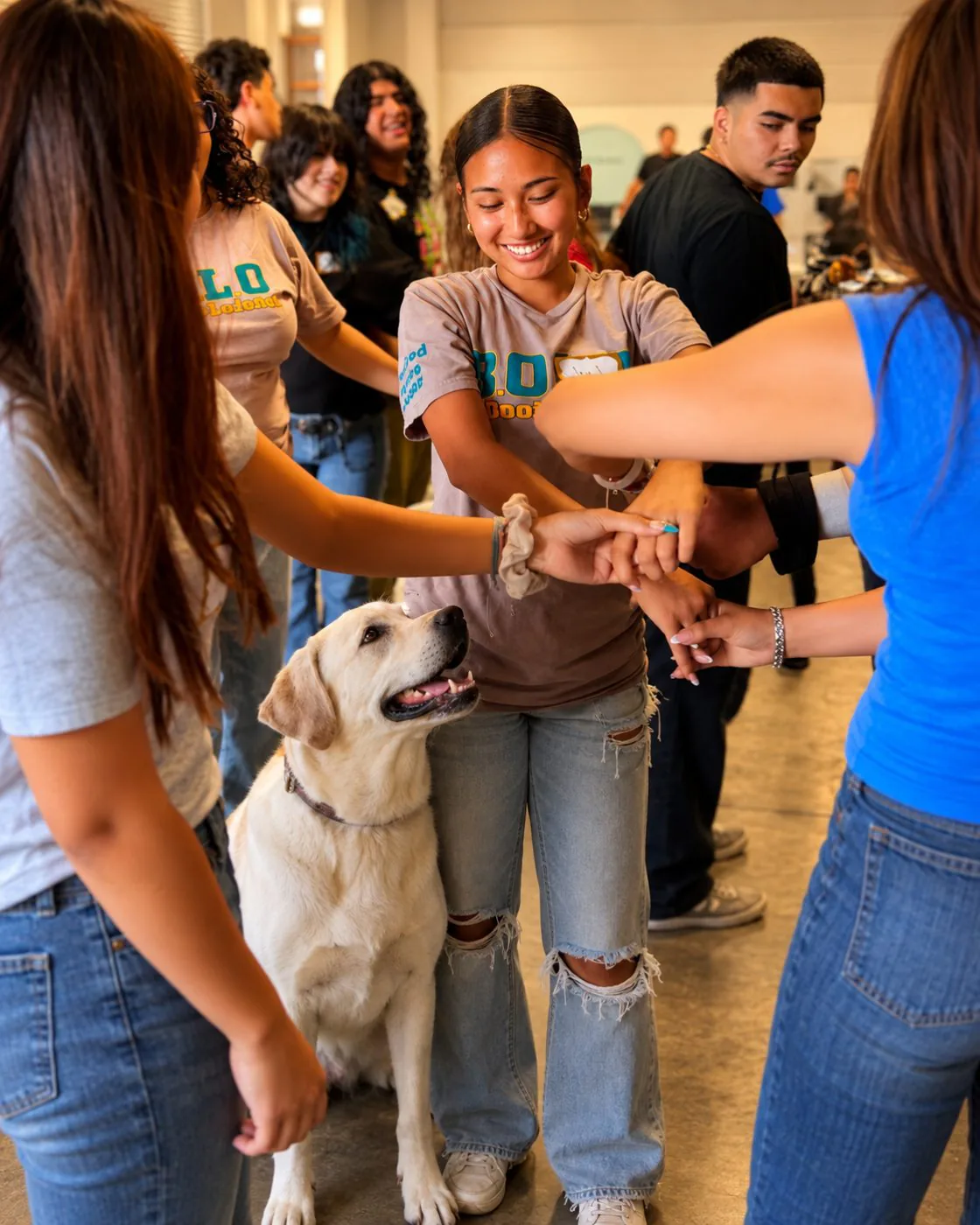
The founder’s separate nonprofit, The Bolo Project, had the opposite problem. It had grant money and no working acquisition engine, and it had just lost its content producer. Its sign-up path is long: “it’s somewhere between like seven to 12 touch points is what we need for them to actually say yes to sign up for the program.”
Two things were broken before any budget moved. The nonprofit held a Google Ad Grant worth up to $10,000 a month that was barely used and, in Brian Pyle’s words, “it’s not set up properly, to be honest.” The registration platform could not carry the Meta pixel, so sign-up attribution needed a workaround from day one. And a November 3 start was needed to promote a December workshop.
Solution
Step #1. Give each channel one job, and put a floor under creative testing.
The Ad Grant took brand awareness and broad problem-aware search, because free budget that expires monthly should buy the queries nobody pays for. Meta took direct response. Simon Kristensen refused to treat the grant as secondary: “if they’re giving you $10,000, I think that is such a low-hanging fruit.” Meta spend was floored at $1,500 a month so there was enough budget to test creative. The client supplied raw video and photos, Growth Mate edited and wrote the monthly scripts, and Gila Kurtz batch-shot iPhone videos.
Step #2. Read the account out loud, including the part that was not working.
By January 6 the account was running video and statics with text together, at a $21 CPM and frequency under 3. Asked whether that was already good enough, Brian Pyle declined the compliment and named the lever: audience-specific creative rather than bid or targeting edits, with assets foldered by target group so fresh cuts could go straight in. In the same call he volunteered that the Google side, the grant Simon had championed ten weeks earlier, “doesn’t really yield any results.”
Step #3. When the two numbers disagreed, follow the one the client was buying.
Cost per lead was healthy and spring enrolment was not. On January 27 the budget moved from a 70/30 summer-spring split to 80/20 to fill the under-enrolled spring workshops. Footage from the January workshop was cut into two personas, aspirational and problem-solving, with a screen-time angle held for summer. The campaigns were pointed at different pages by intent. When the summer kickoff turned out to collide with Father’s Day, it went live without dates while the client confirmed a new one.
Results

Book a discovery call about your business goals



- ✓Non-binding introductory meeting
- ✓Explore your growth potentials
- ✓Talk to our experts