

We find what is holding your store back, fix it, and scale only when the numbers hold
APPLY TO WORK WITH US
Find the real problem first. Then measure the fix in your store, not in the ad account.
Every store has one thing holding it back more than anything else. We find it before we change a thing, because fixing the wrong problem wastes money.
 Growth Mate
We judge our work on your store’s revenue and margin. What an ad platform reports is one input, and it does not get the final say.
 Growth Mate
Three problems that stall an ecommerce store, and what we do about each.
Pick a problem to see how we handle it.
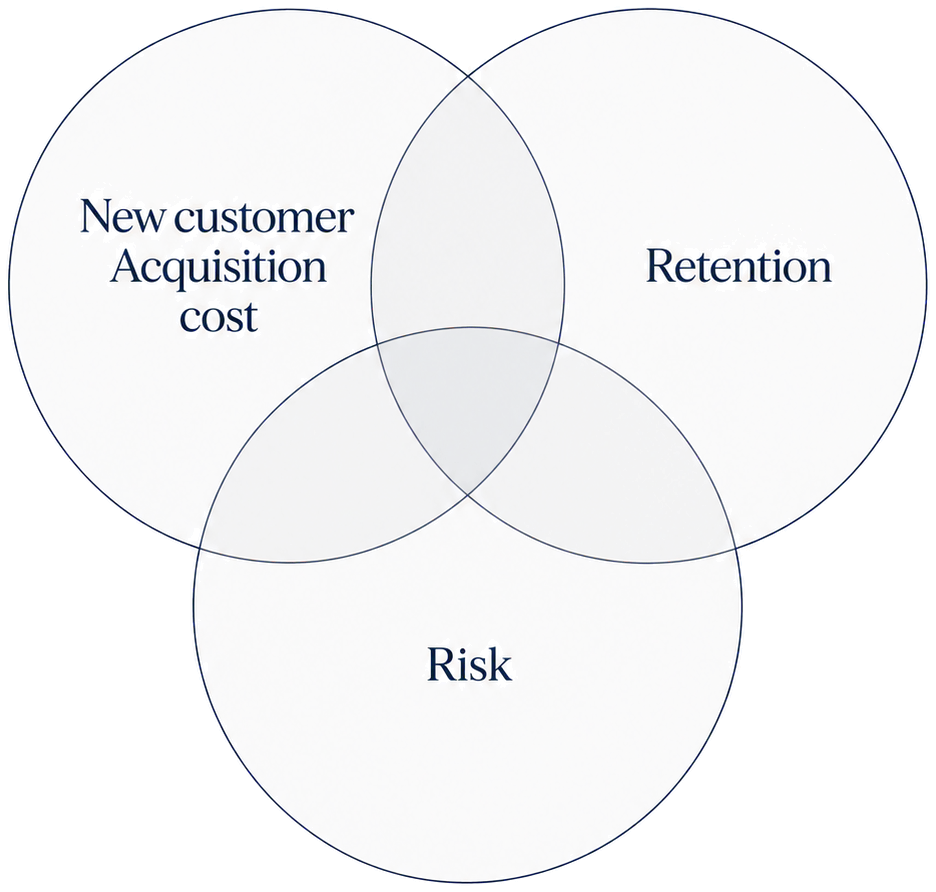
Each new customer costs more than the last one did
When the cost of a new customer climbs, the budget is rarely the cause. We look at four things first: tracking that has stopped counting sales, ads people have seen too many times, more advertisers bidding for the same buyers, and a website that converts fewer visitors.
We check them in that order. Tracking comes first, because no other number can be trusted until every sale is counted. If the ads and the cost of a click are steady but fewer visitors buy, the problem sits on the website and new ads will not fix it. If the ads are worn out, we brief new ones with a different opening, angle or format.
You get the cause in one sentence, with the numbers behind it, before any money moves.
IntroGrowth MateDiagnosisGrowth Mate PlanGrowth Mate
 RoutineGrowth Mate
 TeamGrowth Mate
 Growth Mate
We find the problem before we change anything in your account.
It starts with a call, where both sides work out whether we are a good fit. If we are, we go through your ad accounts, your tracking and your store data before we touch a campaign. Only then do we say what we would change, and in what order. Getting from kickoff to launch usually takes about four weeks.
The first call.
- Your numbers: Revenue, margin, order value and what you spend on ads today.
- What stalled: Where growth slowed down and what you have already tried.
- Fit: We take on stores with at least $100,000 a month in revenue.
- A straight answer: If we are the wrong team for you, or it is too early, we say so.
- Access: To start, we need your ad accounts, your store, your analytics and your email platform.
The audit.
- Tracking: Every sale should be counted once and reach the ad platforms. If not, we fix that before anything else.
- Account history: At least 90 days of Meta and Google results, to see which ads and search terms made money.
- Unit economics: Your break-even from your margin, and the return and cost per sale the business needs.
- Creative: Which ads carry the account, which are worn out and what is missing.
- Website and feed: Whether visitors buy, and whether your product feed holds Google Shopping back.
Plan and build.
- The constraint: We name the one thing holding growth back most, and show the numbers behind it.
- Targets: Revenue, the return on your total ad spend and the cost of a new customer, agreed before we start.
- Your sign-off: You approve the campaign structure, the creative direction and the launch date.
- Build: Campaigns are built paused. Nothing is switched on until it has passed our checks.
- First ads: The first batch of creative is briefed from what the audit found.
Launch and after.
- Launch: Campaigns go live on the date you confirmed, and we tell you when they are running.
- First days: We watch delivery, spend and tracking, and tell you what to expect while the platforms learn.
- First changes: Budget moves toward what is selling, and ads that are not selling are paused.
- Routine: Daily checks, weekly adjustments and a monthly report become the standing rhythm.
- Review: A check-in after 30 days to hold the results up against the targets.
You approve the plan before anything goes live.
When growth stalls, a bigger budget is rarely the answer. Spend goes up, each sale costs more, and the account settles at the same ceiling as before.
So the plan is built on your store data and your margin. It names the one thing to fix first, sets the targets, and puts everything else in order behind it.
 Growth Mate
What the plan covers.
Each part ends in a decision: what we fix first, what we leave alone, and the number that will tell us whether it worked.
 Growth Mate
Checked every working day. Adjusted every week. Reported every month.
Most of the work is routine, done properly. The same checks each morning, the same reviews each week, and a monthly report that says what changes next. You hear from us between reports too, whether the news is good or bad.
What happens when.
- Every working day: We check spend against budget, cost per sale and return against target, and look for disapproved ads or payment problems.
- Every week: Budget moves from what is losing to what is winning. On Google we block search terms that spend without selling. Ads that have stopped working are paused or reworked.
- Outside the ad account: Each week we look at one thing beyond the ads, such as your site, offer, checkout, emails, reviews or competitors, and send you what we found.
- Every two weeks: A check-in with the lead on your account.
- Every month: A full report measured against your targets, and a test plan for the month ahead.
How we judge the work.
- Store numbers first: Revenue and margin in your store decide. What an ad platform reports is one input.
- Three targets: Revenue, blended MER (all store revenue divided by all ad spend) and the cost of a new customer, each held against the number we agreed.
- One bad day: We treat it as noise. Three bad days in a row are a problem, and we act on it.
- One change a week: On Google we change a campaign's bids or budget once a week at most, so each change can be read.
- Pause test: Attribution is never exact. Pausing the ads for a week and watching store revenue shows how much they really drive.
- Tools: Shopify is the source of truth for sales and margin. GA4 and Google Tag Manager handle tracking, and Klaviyo runs email & SMS.
One person owns your account. A small squad backs them.
A senior lead owns your account day to day and answers for the result. Behind them are specialists in media buying, creative, email & SMS and web development, working remotely from around the world. Each one has a clear part of the work, and you know all of them by name. Small squads keep handoffs few and decisions quick.





How the work changes as your ad spend grows.
An account spending $10,000 a month is not run like one spending $100,000. The structure, the number of new ads and the pace of testing all change with spend. So does the thing that moves growth most.
$5K TO $15K A MONTH: CREATIVE
At this level one strong ad can carry the whole account, so most of the effort goes into creative. We keep the structure simple and test one thing at a time.
$15K TO $30K A MONTH: STRUCTURE
There is now enough data to split campaigns by audience and product category, so the budget can follow what sells. A wider range of ads reaches buyers the first ones missed.
$30K A MONTH AND UP: CHANNELS TOGETHER
Meta creates demand that Google’s brand search then collects, and email brings buyers back for less than an ad would. We judge the channels as one system, on store revenue. Past $75K a month, small gains in efficiency are worth large sums, so the work turns to finding them.
Growth MateWe raise spend in steps, and only while returns hold.
Doubling a budget rarely doubles sales at the same cost. So every increase is checked against your break-even before we make it, and again after. When the store is not ready for more spend, we say so and fix that first.
$5K TO $15K A MONTH: CREATIVE
At this level one strong ad can carry the whole account, so most of the effort goes into creative. We keep the structure simple and test one thing at a time.
$15K TO $30K A MONTH: STRUCTURE
There is now enough data to split campaigns by audience and product category, so the budget can follow what sells. A wider range of ads reaches buyers the first ones missed.
$30K A MONTH AND UP: CHANNELS TOGETHER
Meta creates demand that Google’s brand search then collects, and email brings buyers back for less than an ad would. We judge the channels as one system, on store revenue. Past $75K a month, small gains in efficiency are worth large sums, so the work turns to finding them.
We work with a small number of brands at a time.
- ✓Tell us about your store
- ✓Choose a time, if your store qualifies
- ✓Applying does not guarantee a place