

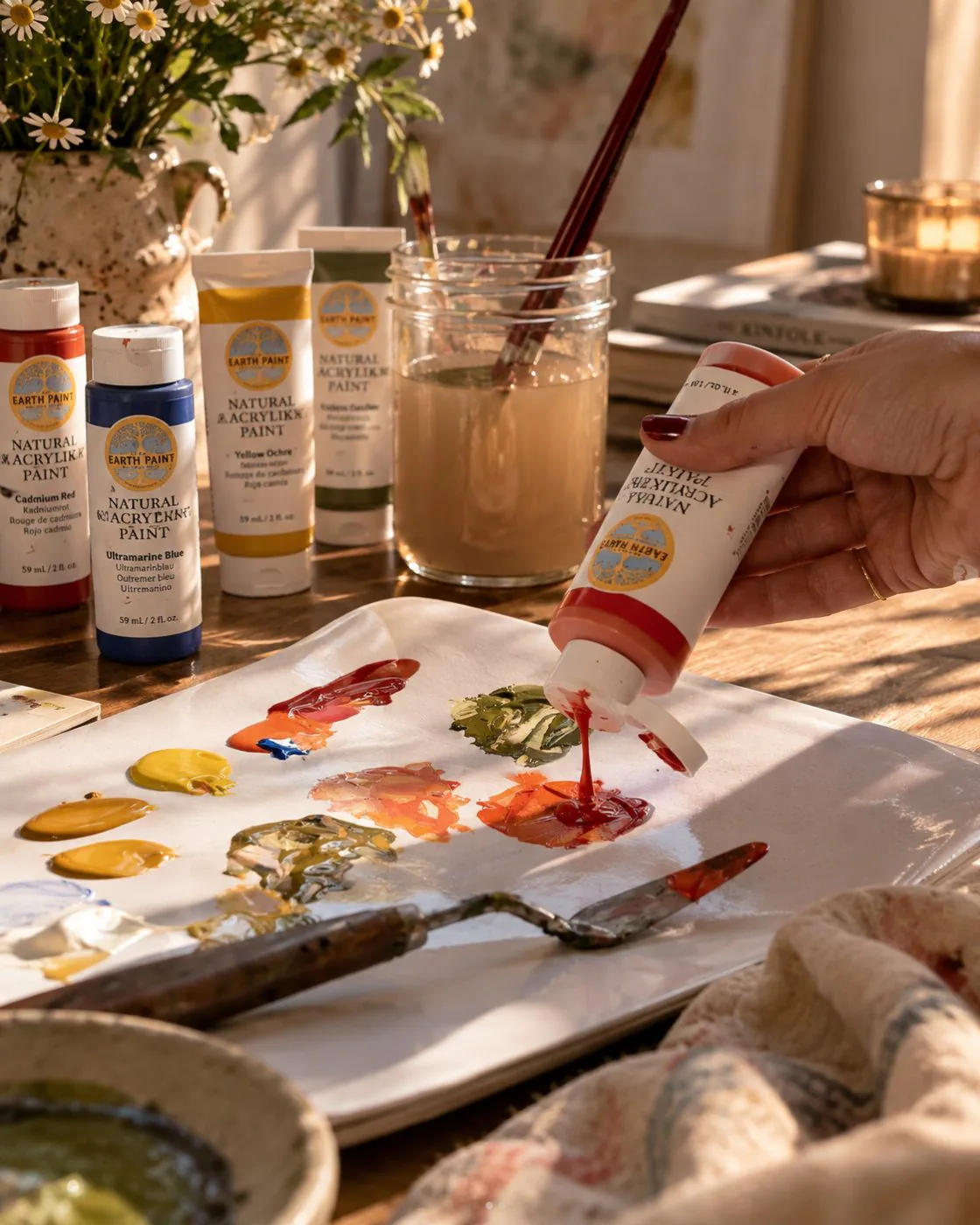



the Meta account was returning 1.6 in August 2024 and nobody knew the all-in break-even was 1.8. Rather than raise the budget, we built the unit economics with the client and set spend against the real floor. Meta ROAS went 1.6 to 2.0 to 2.45 by 11 September 2024, and by December the winner carried $270 a day above a ROAS of 2.
Key results.
Platform-reported Meta figures and a modelled break-even, June to December 2024, on a small account.
Challenge
Natural Earth Paint had a loyal base and wanted materially bigger growth. It also had two customers inside one brand, fine artists buying oils and acrylics and parents buying kids’ craft kits, served by one newsletter and one set of collection pages.
The store had just moved off WordPress onto Shopify and historic sales had to be imported, so there was no clean year-on-year baseline. There were 67 products, 65% of traffic was mobile against a theme that could not do what the team wanted, and site conversion rate was under 1%.
The money problem was the real one. The client did not know its break-even ROAS, so nobody could say whether the budget was right. Cards were maxed out. Over $100,000 a year was going into marketing, and the client said so plainly: “spending so much money on advertising and I don’t know whether we’re getting the return that we want at this point.”
Solution
Step #1 Find the floor.
We built the unit-economics model live with the client: AOV, COGS, shipping, fees, pick and pack, packaging and returns, then operating expenses at roughly 37% of revenue. Break-even came out at 1.2 on COGS alone and 1.8 with operating cost in at the then-current spend rate. That moved the goal from a ROAS target to profit per marginal dollar. It also produced the first no. The client believed $12,000 a month would improve returns, and Simon corrected her: “that’s actually not what I meant necessarily. What I just meant with the 12,000 was if you wanted to get outside of learning phase, which is not going to improve the growers.”
Step #2 Rebuild what the ads landed on.
We put PageFly on the homepage and top product pages, built individual templates for all 67 products each carrying its own blurb, and shipped landing pages for acrylics, kids and fine art fronted by a video of the founder. We also chased the Omnisend bug that stopped the 10% new-subscriber code stacking with the $100 free-shipping threshold, which had somebody approving codes by hand every morning.
Step #3 Put the audiences head to head.
On Meta we ran a new campaign against the old one, a 1% lookalike, expanded 3, 5 and 10% versions, and interest stacks. We ran a 14-day test switching off every dynamic product ad, because the algorithm was over-prioritising them at the cost of blended performance and order value. Then we put manually targeted audiences against Advantage+. Targeted won on ROAS and CPM, so we took it from rough parity to $270 a day and cut Advantage+ to $50. The winning creative was video of paint mixed and swirled, no text overlay.
Step #4 Calendar and reporting.
We designed the Green Friday programme with the client: 25% off from 26 November to 1 December, a Cyber Monday code gated behind the Facebook group, and VIP early access for repeat buyers at twice AOV. Bi-weekly reports went to the founder from September 2024, and we wrote the Q1 2025 quarterly plan.
Results


Book a discovery call about your business goals



- ✓Non-binding introductory meeting
- ✓Explore your growth potentials
- ✓Talk to our experts